


In contemporary interior design, the choice of wood is not only an aesthetic consideration but also determines the feel, longevity, and value of the product. Walnut wood, oak wood, and Afzelia wood are three popular material lines in the high-end segment — each possessing unique properties, advantages, and disadvantages, suitable for different applications and tastes. This article provides an in-depth analysis of color, grain, durability, workability, cost, and style compatibility to help you make the right choice for your contemporary project.
Walnut wood, oak wood, and Afzelia wood in contemporary interior design
Color and Grain – The Aesthetic Language
Walnut wood is famous for its warm, chocolate brown tone, sometimes shifting to dark brown or a slightly purple hue in some wood fibers. The grain is smooth, featuring subtle, undulating lines that create a sense of luxury, warmth, and rich depth. Walnut is easy to pair with both neutral tones and metallic accents (brass, copper).
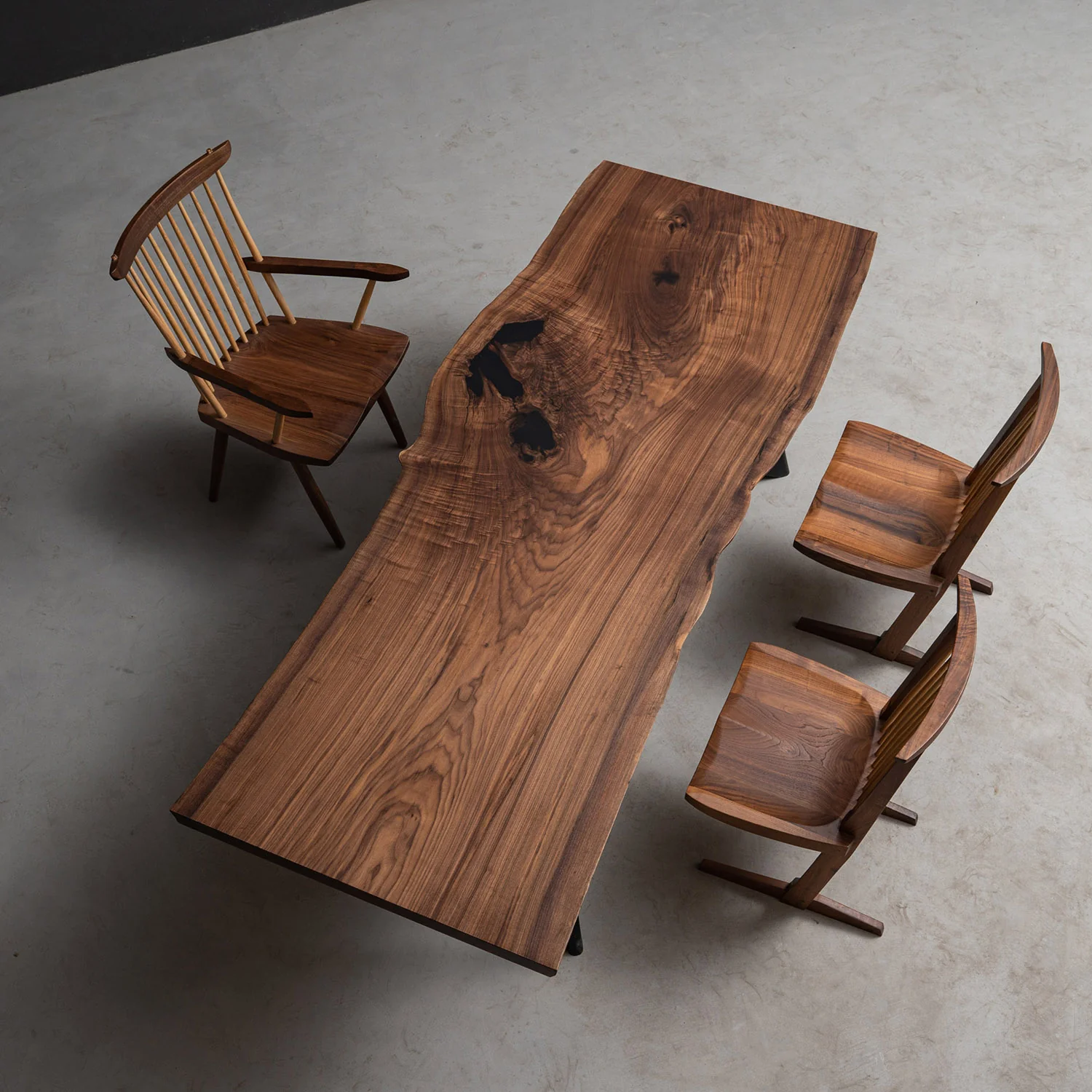
Oak wood has a lighter tone: ranging from pale yellow to amber, sometimes with a slight grayish tint if treated with stain. The oak grain is distinct, featuring knots and straight lines, providing a natural, robust, and somewhat more “rustic” feel. Oak is suitable for contemporary spaces that aim to retain warmth while remaining airy and bright.
Afzelia wood (or Afzelia groups with red tones) has a more vibrant warm tone, shifting from reddish-brown to ruby red. The grain is often dense, sometimes featuring complex patterns, giving it a highly “precious” visual appearance. The prominent color of Afzelia easily becomes a focal point, but it also needs to be moderated in the overall composition to avoid a heavy feel.
Durability, Stability, and Load-Bearing Capacity
Walnut wood belongs to the hardwood group, is durable, and has relatively good stability with moderate shrinkage. If properly treated, walnut exhibits minimal warping, and has good resistance to force and abrasion – making it suitable for high-end tables, cabinets, and chair frames.
Oak wood is very hard and has excellent load-bearing capacity, especially white oak, which has high stability and better moisture resistance compared to many other wood types. This makes it an ideal choice for flooring and furniture that undergoes frequent load bearing.
Afzelia wood is typically very solid, hard, and durable over time; many Afzelia varieties possess high natural resistance to termites and decay. However, some varieties may be sensitive to humidity fluctuations – requiring careful treatment when used in humid environments.
Workability, Finishing, and Post-Treatment Aesthetics
Walnut is easy to work with, yielding a smooth surface when sanded; staining and veneering both achieve high effectiveness. Polished walnut surfaces provide a warm sheen, lending an “aged elegance” appearance.
Oak has a pronounced grain, so surface treatment requires specialized techniques to prevent the “grain disruption” phenomenon when applying coats. Oak is very suitable for veneering techniques and matte finishes; it also pairs well with solid white paint for a minimalist contemporary style.
Afzelia often requires skilled craftsmen during fabrication because many varieties have high hardness; however, when finished, Afzelia provides a surface with great depth and a beautiful luster, especially when combined with a slight gloss finish or gold/metallic leaf accents.
Cost and Commercial Viability
Afzelia wood is typically positioned in the highest price segment due to its rarity and distinctive color tone; it is suitable for unique products, tabletops, and high-end decorative details.
Walnut wood is a premium choice but is popular in the modern luxury market – its price is high but it is more accessible than Afzelia.
Oak wood has the most competitive cost among the three types; it is the optimal choice when a good quality product is needed while controlling project costs.
Application in Contemporary Interiors
Walnut is often used for: dining tables, nightstands, sofa frames, kitchen cabinet fronts, and accent wall paneling. Walnut highlights a warm, refined aesthetic, suitable for living rooms and home offices.
Oak is suitable for: flooring, open shelving systems, chairs, and dining tables in the Scandinavian/Scandi-Contemporary style, where a natural, bright, and durable appearance is needed.

Afzelia is suitable for: statement pieces, round tabletops, headboards, and unique decor items — where rare color and high value are required.
Wood Selection Advice for Contemporary Projects
-
If you are pursuing a warm, luxurious look that is not overly ornate: choose walnut wood.
-
If durability, reasonable cost, and a natural, bright feel are priorities: oak wood is the optimal choice.
-
If the goal is to create a distinctive focal point, invest in long-term value and uniqueness: Afzelia wood will make a strong impression.
HANSA INTERIOR COMPANY
- Southern Office: 55 Street No. 39, Van Phuc Urban Area, Hiep Binh Ward, Ho Chi Minh City
- Northern Office: 37 Alley 98, Dam Quang Trung Street, Long Bien Ward, Long Bien District, Hanoi.
- Factory: 263 Nguyen Thi Minh Khai Street, Di An Ward, Ho Chi Minh City.
- Mobile: 0912.471.925 – 090.139.8689
- Email: hansaglobalvn@gmail.com
- Website: www.hansaglobal.vn
You may be interested in
Veneer Technique and its Role in Contemporary Wood Interiors
How to create luxurious color combinations in contemporary interiors
Why do the elite favor the Contemporary style over the Neoclassical style?