


In contemporary interior design, wood always holds a central role. However, choosing between natural wood and engineered wood is a question that many homeowners and architects carefully consider. Each type of wood carries its own advantages and disadvantages, directly influencing the aesthetics, durability, and budget of the project. This article will help you understand the differences and how to apply these two types of wood in contemporary style.
Natural Wood and Engineered Wood in Contemporary Interiors
Characteristics and Aesthetic Value
Natural Wood:
-
Has unique wood grain, natural color, providing a luxurious and intimate feel.
-
Often used in details that emphasize sophistication: tables, chairs, cabinets, shelves, and high-end flooring.
-
Each product is a “unique masterpiece” because no two wood grains are exactly alike.
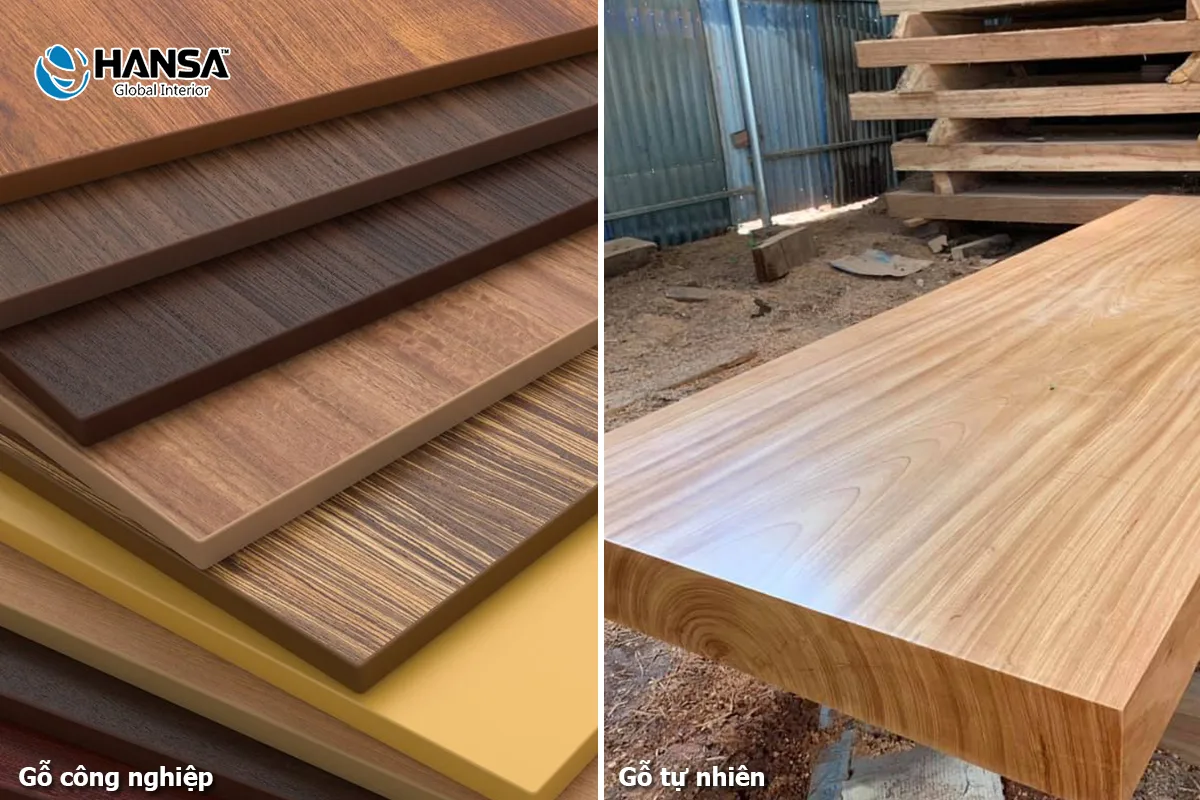
Engineered Wood:
-
Produced from wood chips pressed with adhesive and finished with veneer, melamine, or laminate surfaces.
-
Offers diverse colors, is easy to customize, and can create surfaces resembling real wood grain or modern minimalist styles.
-
Suitable for contemporary spaces requiring uniformity and streamlined design.
In contemporary style, natural wood creates high-end focal points, while engineered wood helps the space look neat and youthful.
Durability and Long-Term Usability
Natural Wood:
-
Durable, with a lifespan that can reach decades, even lasting through generations.
-
Offers good load-bearing capacity, suitable for products requiring high sturdiness such as beds, dining tables, and large cabinets.
-
However, it requires proper treatment to prevent warping and shrinkage in tropical climate conditions.
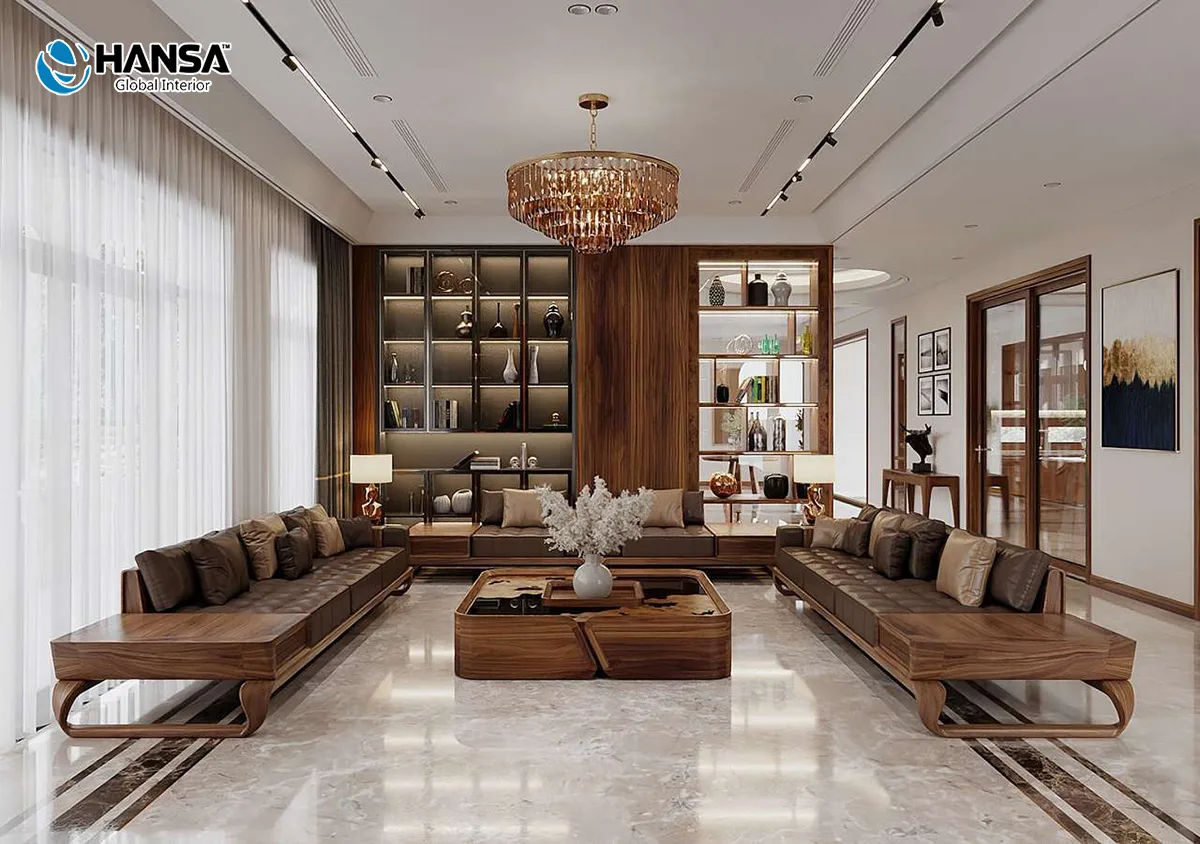
Engineered Wood:
-
Less durable than natural wood, typically lasting 7–15 years depending on the type (MDF, HDF, plywood).
-
The moisture resistance of engineered wood has been improved thanks to new technology, yet placement environment still needs careful consideration.
-
Suitable for furniture with an average lifespan, easily replaceable according to new trends.
In contemporary style, which emphasizes flexible changes, engineered wood is often chosen for easily replaceable items, while natural wood is reserved for the “backbone” details of the house.
Cost and Applicability
Natural Wood:
-
High cost due to material scarcity and the requirement for extensive manual processing.
-
Suitable for homeowners aiming for long-term investment, asserting class, and sustainable value.
Engineered Wood:
-
Reasonable cost, saving 30–50% compared to natural wood.
-
Diverse designs and colors, easy for mass production, reducing construction time.
-
A popular choice for modern apartments, commercial projects, or young families.
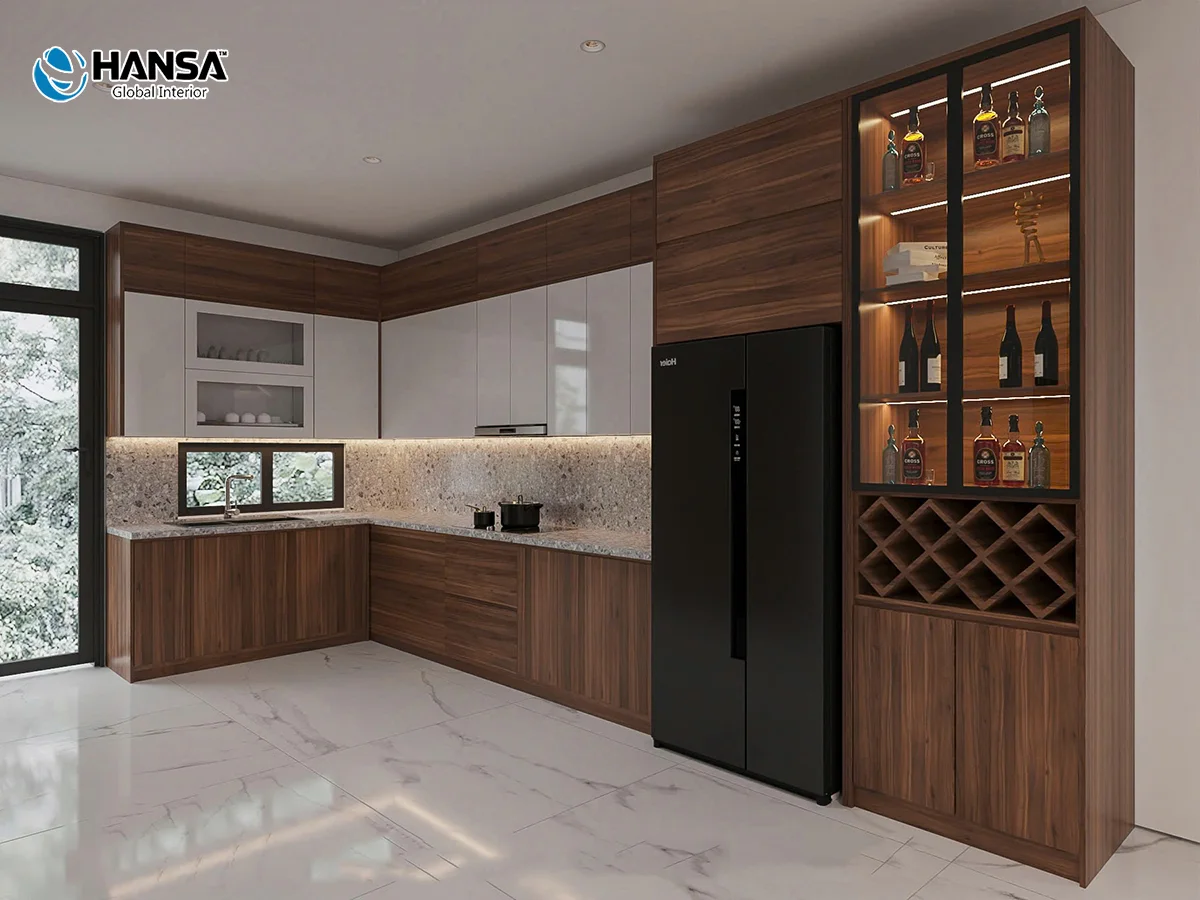
In contemporary interior design, combining both natural and engineered wood helps optimize the budget while still ensuring aesthetic value.
Both natural wood and engineered wood have their own place in contemporary interior design. Natural wood brings luxury, class, and sustainable value; while engineered wood provides flexibility, cost savings, and suitability for the modern lifestyle.
Recommendation: Cleverly combine both types of wood – use natural wood for details requiring durability and longevity, and engineered wood for contemporary accent areas. This is the way to create a contemporary space that is both refined and cost-effective.
HANSA INTERIOR COMPANY
- Southern Office: 55 Street No. 39, Van Phuc Urban Area, Hiep Binh Ward, Ho Chi Minh City
- Northern Office: 37 Alley 98, Dam Quang Trung Street, Long Bien Ward, Long Bien District, Hanoi.
- Factory: 263 Nguyen Thi Minh Khai Street, Di An Ward, Ho Chi Minh City.
- Mobile: 0912.471.925 – 090.139.8689
- Email: hansaglobalvn@gmail.com
- Website: www.hansaglobal.vn/en/
You may be interested in
Material combination in contemporary wood interiors
A comparison of walnut wood, oak wood, and Afzelia wood in contemporary interior design
The philosophy of Minimalism in high-end contemporary interior design