


In the world of high-end wood furniture, the veneer technique has become one of the optimal solutions for aesthetics and functionality, especially within the Contemporary style. Veneer not only delivers a refined beauty but also helps optimize the use of rare wood resources. With many years of experience in designing and executing high-end wood interiors, Hansa has applied this technique to create projects that are luxurious, sophisticated, and enduring.
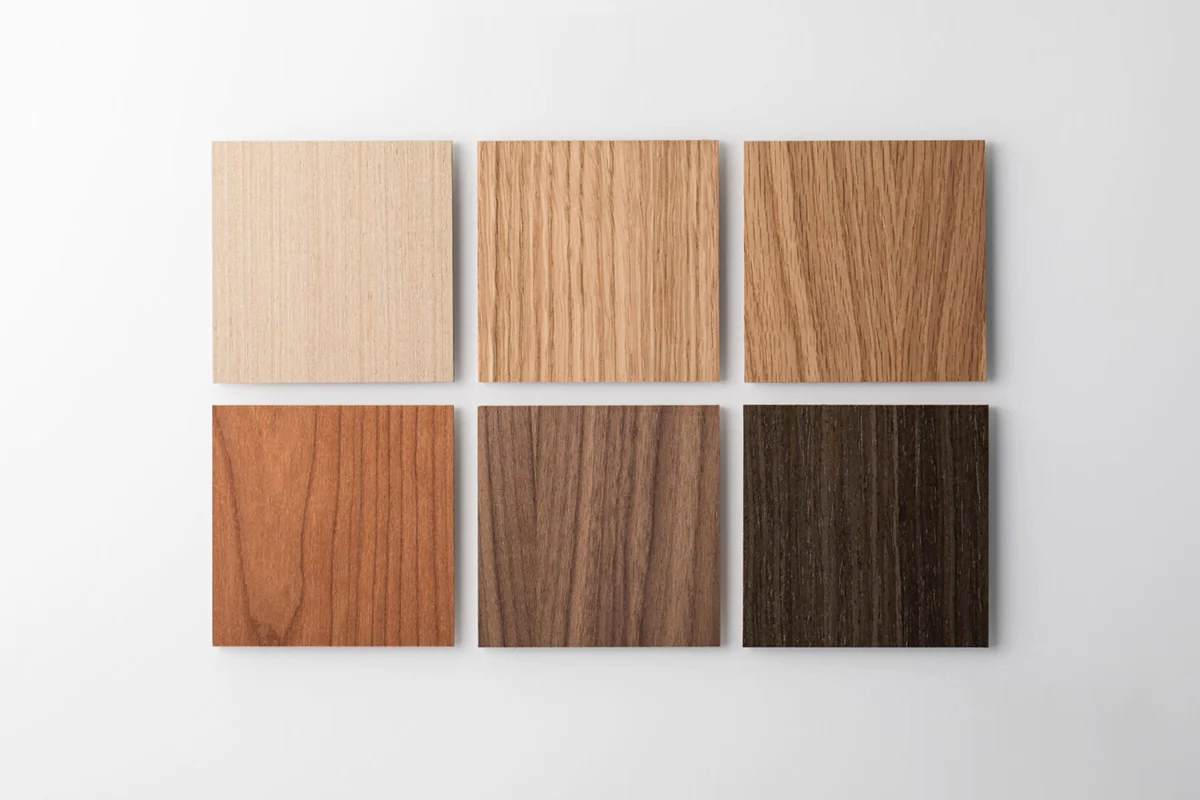
Veneer Technique in Contemporary Wood Interior Design
What is the Veneer Technique?
The veneer technique is the process of slicing natural wood (typically 0.3mm – 1mm thick) into thin sheets, which are then adhered to the surface of engineered wood panels such as MDF, HDF, and plywood. As a result, veneer reproduces the beauty of natural wood while ensuring flexibility, cost-effectiveness, and ease of construction.
-
Origin: Veneer originated in Europe and subsequently spread worldwide.
-
Characteristics: It preserves the natural wood grain and facilitates the creation of artistic patterned effects.
-
Application: Used for cabinets, beds, tables, chairs, shelves, wall paneling, and decorative details.

Popular Types of Veneer
With veneer, one can bring the beauty of rare woods like walnut, red afzelia, oak, etc., into the living space without the need for solid wood throughout.
Popular Veneer Varieties
The veneer technique allows for the utilization of many types of precious wood as a surface finish:
-
Walnut Veneer: Features a chocolate brown color and luxurious flowing grain.
-
Oak Veneer: Offers light color tones and straight, youthful grain patterns.
-
Red Afzelia Veneer: Characterized by a reddish-brown color and large, strong grain.
-
Ash Veneer: Light-colored, easily stained, suitable for minimalist styles.
-
Engineered Veneer (Reconstituted Veneer): Creates uniform grain, suitable when large surface areas are needed.
Each type of veneer carries a different nuance, ranging from subtle and elegant to powerful and strong, meeting the diverse demands of contemporary styles.
Advantages of the Veneer Technique
Compared to solid natural wood, veneer offers several advantages:
-
High Aesthetic Value: Features a natural wood surface with diverse grain patterns and colors.
-
Cost Savings: Reduces costs by 30–50% compared to using solid wood.
-
Resource Efficiency: Only a few millimeters of veneer are needed to cover a large surface area.
-
Ease of Installation: Veneer is light, easy to shape, and can be bent over curved surfaces.
-
Combination Potential: Easily integrates with glass, metal, and stone in contemporary style.
As a result, veneer is not only suitable for high-end projects but also expands its application to various interior items.
Limitations to Note
Despite its many advantages, the veneer technique also has some points that require attention:
-
Durability depends on the core layer: If the MDF/HDF core is of poor quality, it will be prone to warping.
-
Easily scratched: The veneer surface is thin, so it needs anti-scratch treatment.
-
Limited water resistance: Veneer can easily peel when exposed to water for a prolonged period.
-
Requires high skill: Veneer installation demands highly skilled craftsmen to avoid peeling or misaligned grain patterns.
Therefore, to achieve high quality, veneer needs to be processed by a reputable construction unit like Hansa, which has many years of experience in crafting high-end wood interiors.
The Role of the Veneer Technique in Contemporary Wood Interiors
In the Contemporary style—which emphasizes minimalism, refinement, and personalization—veneer plays a vital role:
-
Creates Modern Spaces: The flat, smooth veneer surface aligns well with minimalist design.
-
Flexible Material Coordination: Veneer harmoniously combines with metal, glass, and stone, creating a luxurious aesthetic.
-
Artistic Value: The marquetry veneer technique transforms the wood surface into a unique piece of art.
-
Budget Optimization: The elite can own a luxurious space, utilizing rare wood grain, without having to invest in entirely solid wood.
-
Sustainability: Reduces the exploitation of natural wood, thus protecting the environment.
In other words, the veneer technique is the bridge between traditional beauty and modern trends in high-end wood interior design.

In contemporary wood interior design, the veneer technique is not only an aesthetic solution but also a sustainable trend, helping to optimize costs and conserve rare wood resources. Veneer delivers luxury, modernity, and personalization – values that the elite consistently seek.
With extensive experience in designing and executing high-end wood interiors, Hansa is proud to be a pioneer in applying the veneer technique across numerous prestigious projects.
Contact Hansa today to transform your space into a contemporary masterpiece – where artistry and sophistication go hand in hand.
HANSA INTERIOR COMPANY
- Southern Office: 55 Street No. 39, Van Phuc Urban Area, Hiep Binh Ward, Ho Chi Minh City
- Northern Office: 37 Alley 98, Dam Quang Trung Street, Long Bien Ward, Long Bien District, Hanoi.
- Factory: 263 Nguyen Thi Minh Khai Street, Di An Ward, Ho Chi Minh City.
- Mobile: 0912.471.925 – 090.139.8689
- Email: hansaglobalvn@gmail.com
- Website: www.hansaglobal.vn
You may be interested in
How to create luxurious color combinations in contemporary interiors
Material combination in contemporary wood interiors
The philosophy of Minimalism in high-end contemporary interior design